
Reviving History: The Monumental Tadelakt Restoration of the Marrakech Walls
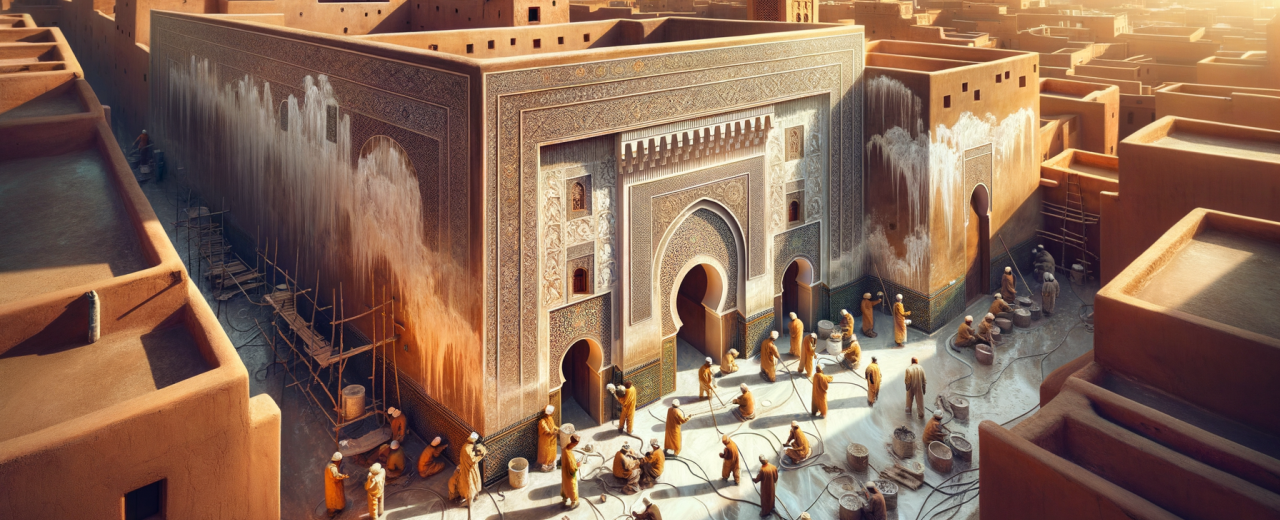
The ancient city of Marrakech stands as a testament to Morocco’s rich history and vibrant culture. Among its most significant and iconic structures is the majestic wall that encircles the city, known as the Marrakech Ramparts. Constructed in the 12th century during the Almoravid dynasty, these walls not only serve as a physical boundary but also represent the cultural heritage and historical legacy of Marrakech.
Over centuries, the wall has weathered the test of time, enduring natural elements and the onslaught of modernity. Yet, a new era has dawned upon Marrakech as it embarks on an ambitious and historic project — the largest Tadelakt renovation ever undertaken — aimed at restoring the glory and vigor of the ancient city walls.
The Significance of the Marrakech Ramparts
The walls of Marrakech, stretching over 19 kilometers, are not mere architectural structures. They are imbued with stories from a bygone era, offering a glimpse into the strategic and defensive genius of the medieval Berber dynasties. Built primarily from pisé, or rammed earth, the walls feature the unique Moroccan signature of chestnut-red hues that blend harmoniously with the city’s skyline.
For centuries, the walls have guarded Marrakech against invasions and floods, acting as a buffer and providing a sense of security for its inhabitants. Simultaneously, they symbolize the essence of Morocco’s architectural tradition, accentuating the seamless blend of form and function.
Understanding Tadelakt
Tadelakt is a traditional Moroccan plastering technique known for its silky smooth finish and durability. Derived from the Arabic word 'dellek', which means 'to rub in', Tadelakt involves hand-polishing lime plaster into a seamless, water-resistant finish. It has been an integral part of Moroccan architecture for centuries, particularly in palaces, hammams, and fountains. The allure of Tadelakt lies in its aesthetic appeal and its ability to withstand the test of time while exuding an organic and luxurious feel.
The Ambitious Restoration Project
In an era where cultural heritage is ever so crucial, the project to restore the Marrakech walls using Tadelakt is both groundbreaking and inspiring. Launched by a collaborative effort between local authorities and international preservation experts, this endeavor aims to reinforce the historical integrity of the walls while enhancing their aesthetic appeal.
The project's scope encompassing the use of Tadelakt for restoration is unprecedented. It marks the largest scale ever attempted for this ancient technique, requiring meticulous planning, skilled artisans, and an unwavering commitment to preserving history.
The Challenges of Using Tadelakt at this Scale
Undertaking a project of this magnitude does not come without its challenges. Tadelakt, while renowned for its beauty, requires expert craftsmanship and precision to achieve its iconic finish. Finding artisans adept in the traditional technique is one of the foremost hurdles, as the process involves hand-polishing the lime plaster with stones to achieve the desired texture. This demands both patience and proficiency, making it a time-intensive and labor-heavy task.
Moreover, the quality and composition of the materials used in creating Tadelakt must adhere to traditional methods. The lime should be sourced locally and organically, which preserves not only the environmental aspect but also ensures the authenticity of the restoration.
Preservation of Cultural Heritage
Beyond aesthetics, this restoration project holds profound cultural importance. The revival of Tadelakt stands as a commitment to preserve Moroccan heritage and invigorate traditional arts that are integral to the nation’s identity. By employing local artisans and reviving age-old techniques, this project seeks to educate and empower the younger generation, fostering an appreciation for their history.
Moreover, it seeks to inspire similar projects across the globe, championing an appreciation for ancient techniques in contemporary times. For Marrakech, a city with a vibrant tourism industry, maintaining the integrity of its historic landmarks is vital not only for cultural preservation but also for sustaining the local economy.
The Long-term Vision and Impact
The vision for this massive restoration project extends beyond the mere refurbishment of the walls. It sets a precedent for integrating traditional practices in modern preservation and urges global architectural communities to value heritage conservation.
Once completed, the renewed walls will not only attract tourists to witness their magnificence and historical relevance but also serve as a model for sustainable restoration projects worldwide. Elevating the status of Tadelakt, the project could potentially initiate a resurgence in the use of this technique within different architectural spheres, ensuring that this unique craft thrives for generations to come.
Environmental and Economic Considerations
The restoration of the Marrakech Ramparts using Tadelakt also underscores a commitment to environmental sustainability. The reliance on natural and locally sourced materials means a reduced carbon footprint, aligning with global shifts towards more eco-friendly construction practices.
Economically, the project is expected to generate significant investment in local communities by creating jobs and fostering skill development. By valuing artisanal craftsmanship, the project supports the socio-economic fabric of Marrakech, fortifying a cycle of cultural and economic growth.
Conclusion
The grand Tadelakt restoration of the Marrakech Ramparts is not just a monumental endeavor in architectural rehabilitation; it is a celebration of Moroccan heritage, craftsmanship, and sustainability. It serves as a beacon demonstrating that in the pursuit of progress, one need not forsake traditions but rather weave them into the fabric of modernity.
This project, with its focus on historical fidelity and innovative preservation practices, offers valuable insights and sets a global standard in heritage conservation. As one of the largest Tadelakt implementations in history, it rekindles our collective effort to pay homage to the past while charting pathways for the future.
Related posts

How to Create a Concrete Effect on Walls Naturally, Without Chemicals or Microcement

How to Modernize a Bathroom in 2026: Ideas, Materials, and Trends Without Heavy Renovation

How to Renovate a Bathroom on a Budget Without It Looking Cheap: The Smart Wall Finish Guide...

Seamless Lime Plaster: The Natural and Breathable Alternative to Microcement and Resins

Lime Mortar for Coating: Types, Applications and How to Achieve a Continuous and Breathable Finish

Lime Mortar: What It Is, Types, and Uses (Complete Guide to Rehabilitating with Natural Materials)

How to Remodel Your Home with Mediterranean Style: Lime Walls, Seamless Floors, and Irresistible...

How to Create Modern Design Walls with Decorative Wall Coverings: The Seamless Alternative to Tile

Pigments for Lime, Cement, Concrete, Paint, and Art: Complete Guide to Types, Uses, and How to...

0 comment(s)