
What is Tadelakt ?
The most interesting thing about Tadelakt , its origin and history to the present day.
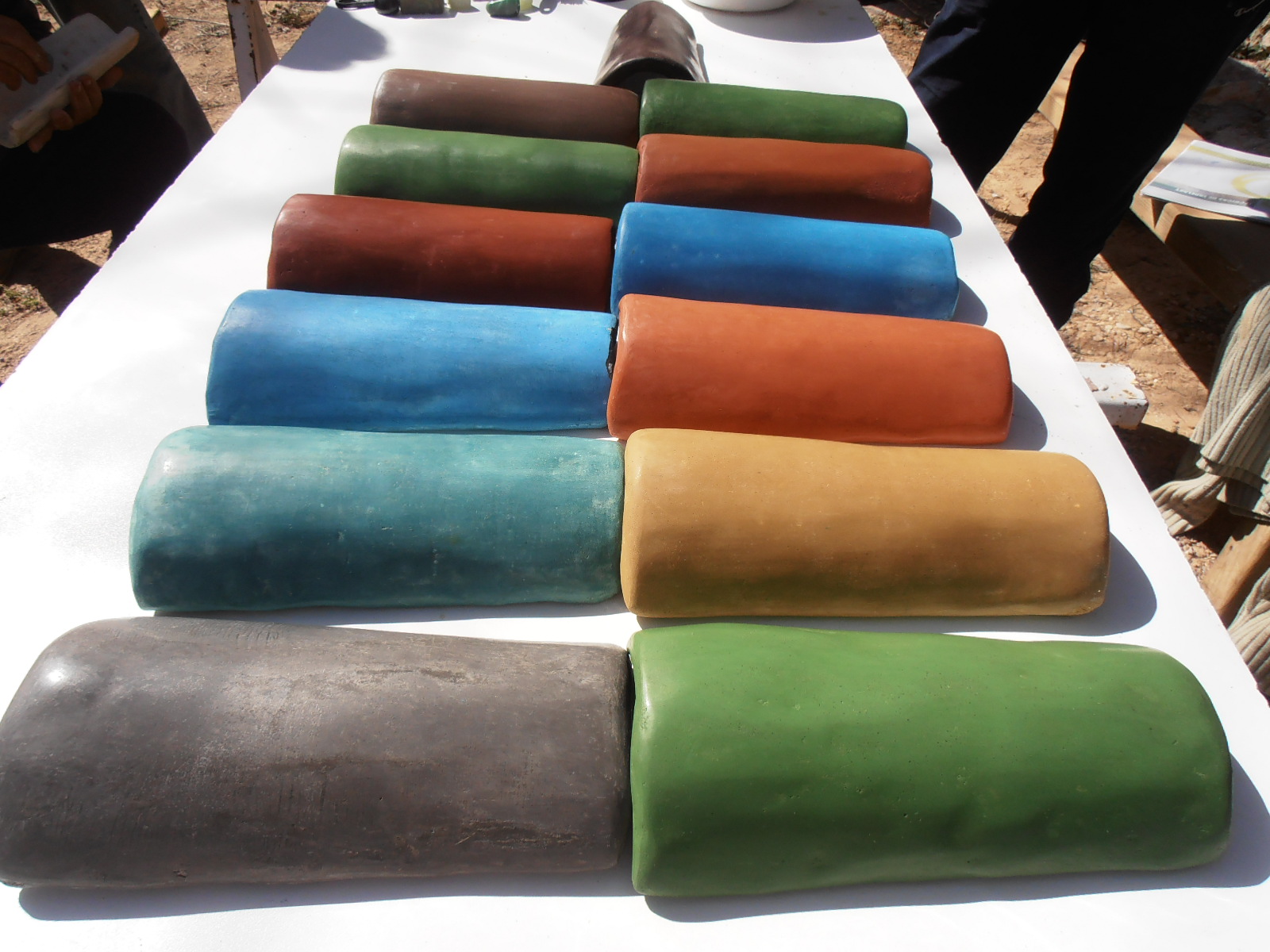
The production of Tadelakt
Here you'll find everything you need to know about Tadelakt , its maintenance, application, history, origin, tips and secrets, reviews and comparisons, and you can even find all the necessary materials of unique and exclusive quality at unbeatable prices. All here, on one website. Now you can dispense with expensive imitations or cheap imports and dive straight into the true pleasure of luxurious Tadelakt without any surprises.
See how Tadelakt is made
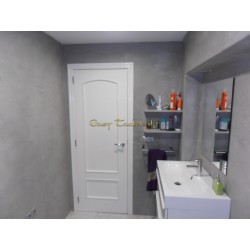
Modernize your bathroom with Tadelakt without removing the tiles
Easy Tadelakt , the continuous, ecological, self-cleaning and antiseptic coating.
Create natural, healthy spaces with unparalleled beauty.
Tadelakt is a unique and inimitable lime coating. When we talk about " Tadelakt ," we're talking about a lime uniquely and exclusively from the Marrakech region. It's the stucco of stuccos, the most beautiful, valuable, and prized of all stuccos, even though with our super-priced options, it might not seem so. Authentic Tadelakt is "only" Tadelakt if the limes come from the Marrakech region, due to its extraordinary geological composition, unique in the world, rich in minerals, a high content of limestone from seashells, and many other compositions and circumstances not found anywhere else in the world.
How Tadelakt is made.
With this lime, obtained through cooking, a master lime-cutter (maalem) must prepare the final Tadelakt , with his ancestral knowledge, his secret recipe, passed down from father to son for generations.
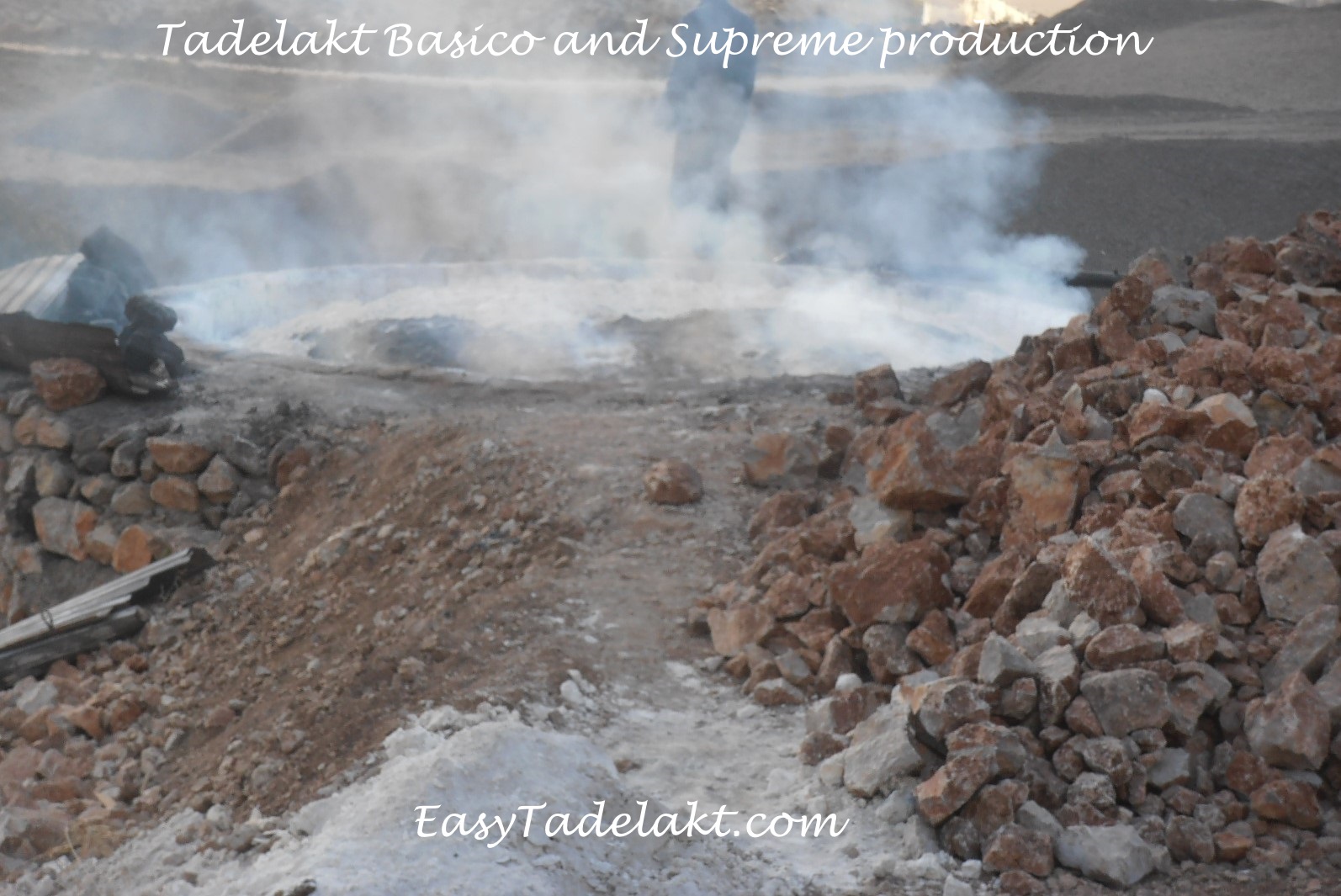
The entire production of this very special lime is carried out by hand from beginning to end, for generations, from father to son. The art of application was also closely guarded by the "Maalems" for generations and continues to this day.
In the Arab world, having Tadelakt in your home is synonymous with luxury, hygiene, warmth, and wealth, just as it is in the rest of the world today.
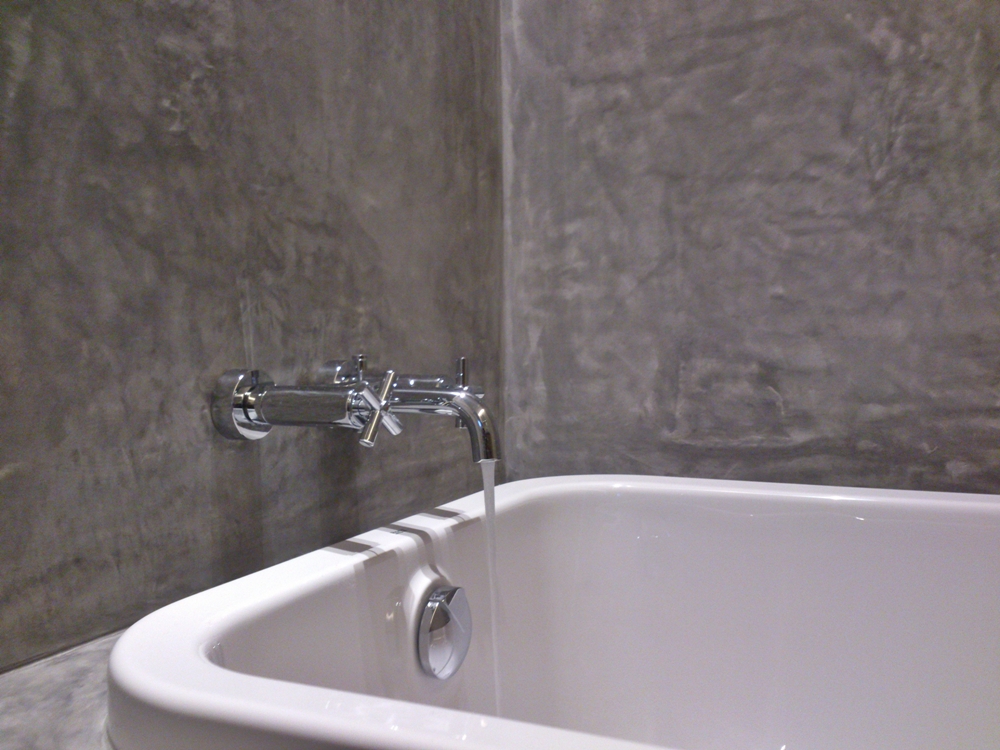
The advantages of Tadelakt
Due to its antiseptic and bactericidal properties, it was primarily used in hammams, Turkish baths, riads, palaces, mosques, but also in murals with humidity problems, etc. It is also the ideal covering for people with respiratory problems and various types of allergies, as Easy Tadelakt maintains a particularly healthy climate and reduces airborne dust. However, it is recently being increasingly incorporated into modern-style buildings around the world.
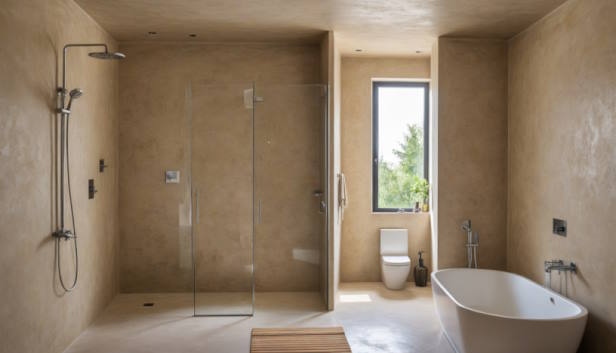
Its technique is not only centuries old but also thousands of years old. It was closely guarded as a secret by the Berber Malem of the Sahara. It was recently discovered by Europeans and has become a fashion trend for spaces with a distinguished, exclusive, and healthy style. It is also being integrated into the world of green building and high-end decoration.
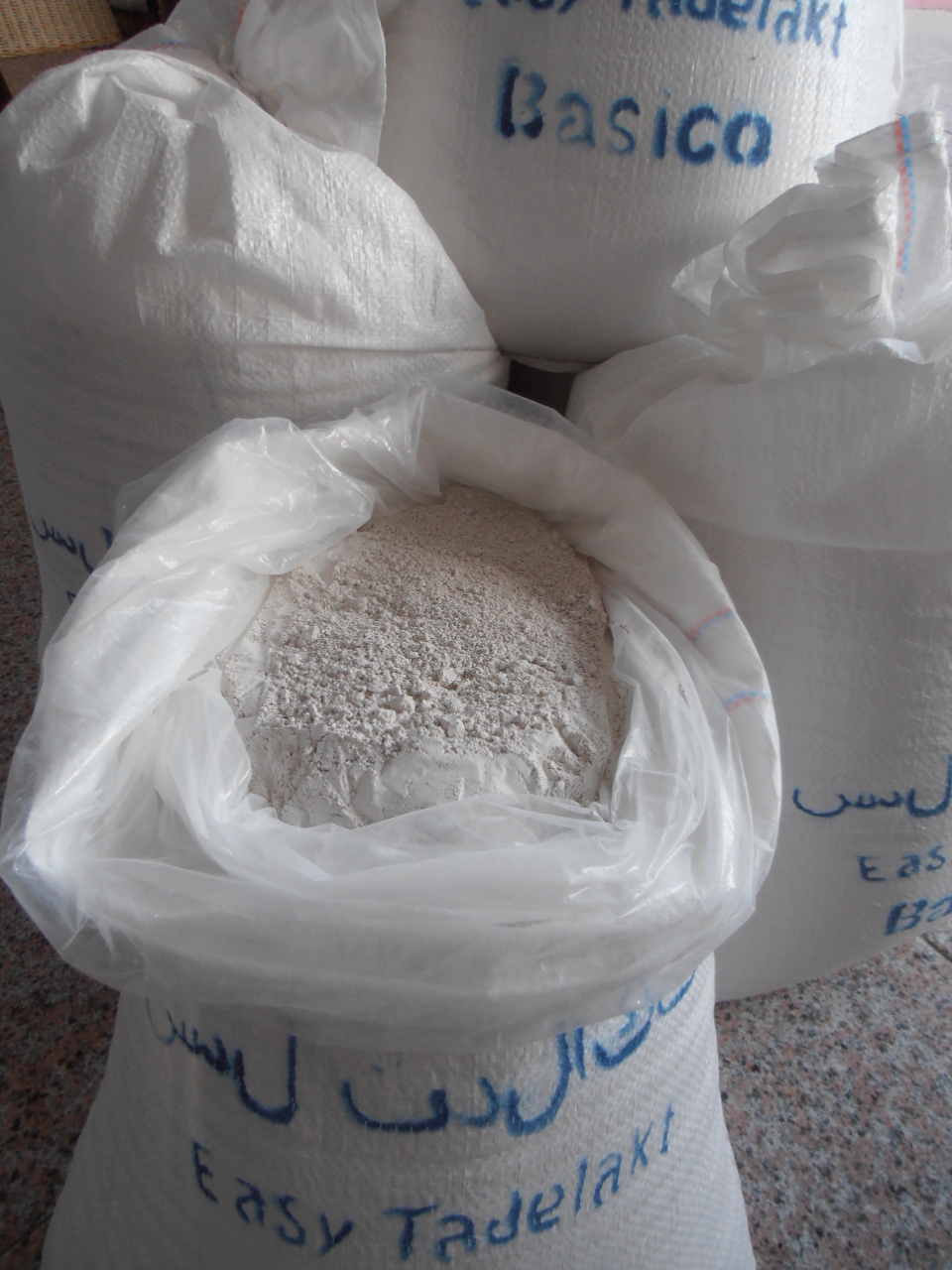
The application of Tadelakt
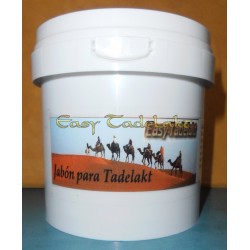
This stucco is applied in two to three layers over a prepared base using a trowel, swirled with a wooden tool, and then smoothed and polished with special stones. It's then impregnated with a special black soap solution and polished once more with a stone, which makes the material hydrophobic. Finally, a wax is usually applied, and that's it. Thanks to our dedication and dissemination of this incredible technique, Tadelakt is now accessible to any home and can be easily applied without having to be an expert in the field. Previously, people had to pay €100 to €500 per square meter to a specialist, and it was only affordable for the very wealthy.
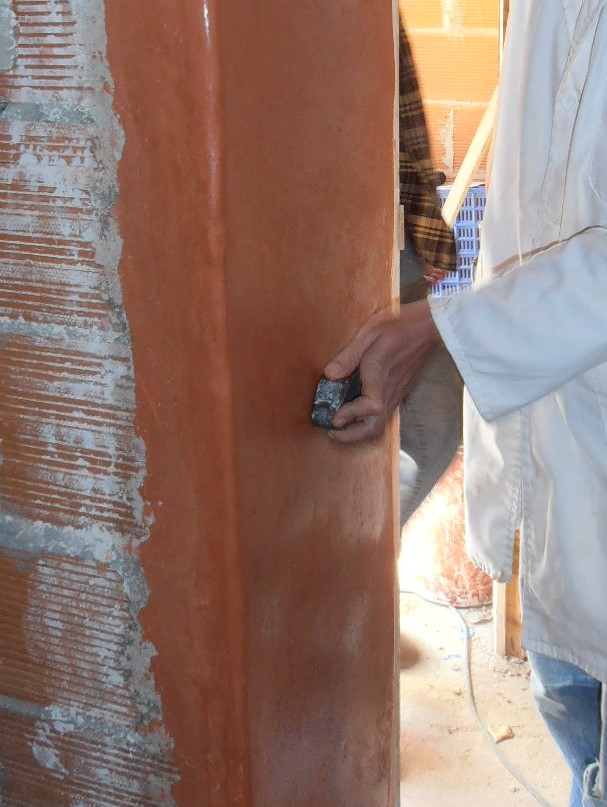
Unique finish and properties of our Tadelakt s.
The finish is a living surface, constantly interacting with its environment. It is water-repellent, antiseptic (prevents the growth of mold, fungi, and bacteria), smooth, semi-gloss to high-gloss, with a feel similar to human skin and unparalleled beauty.
Tadelakt is considered the stucco of stuccos due to its inimitable lime and preparation, laborious technique, its multiple properties and its unparalleled beauty.
Our Tadelakt is like having a tree in your home, as it constantly consumes carbon from the environment, returning pure air.
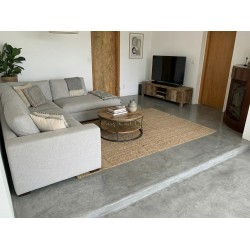
It fits perfectly into rustic, as well as very modern or classic environments.
Tadelakt purifies your environment by absorbing carbon dioxide from the air and releasing negative ions, which purify and heal the environment.
It is the perfect covering for allergy sufferers and people with respiratory problems as it is chemical-free and acts by purifying the air.
It is also ideal for application on walls with moisture problems, such as in cellars, basements, steam rooms and others.
For these difficult times of change, our products are now the best and most affordable solution.
In Morocco, Tadelakt is used to keep homes cooler in the summer, but also to maintain warmth in the winter, thanks to its extraordinary properties.
The original Tadelakt .
The original Tadelakt is the most durable and long-lasting coating in existence (even in archaeological excavations, blocks of walls from houses, already in ruins, have been found with Tadelakt glued to them in perfect condition).
Tadelakt is 100% natural, free of chemical additives, and its extraction and manufacturing leave a minimal ecological footprint. It is produced entirely by hand.
Tadelakt is the best alternative for tiles, wall tiling, flooring and other surfaces.
Tadelakt is insulating, its surface is cool in summer and warm in winter.
It is bioclimatic, constantly regulating the environmental climate.
It is more resistant to knocks, cracks, water and the passage of time than any other lime.
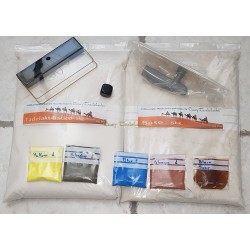
Do you want to know Tadelakt a little better?
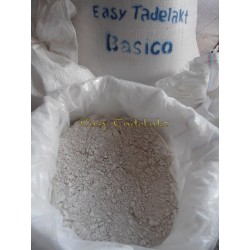
With this learning kit you can do wonderful things.
It will be a lot of fun!
Discover the largest Tadelakt project in history.
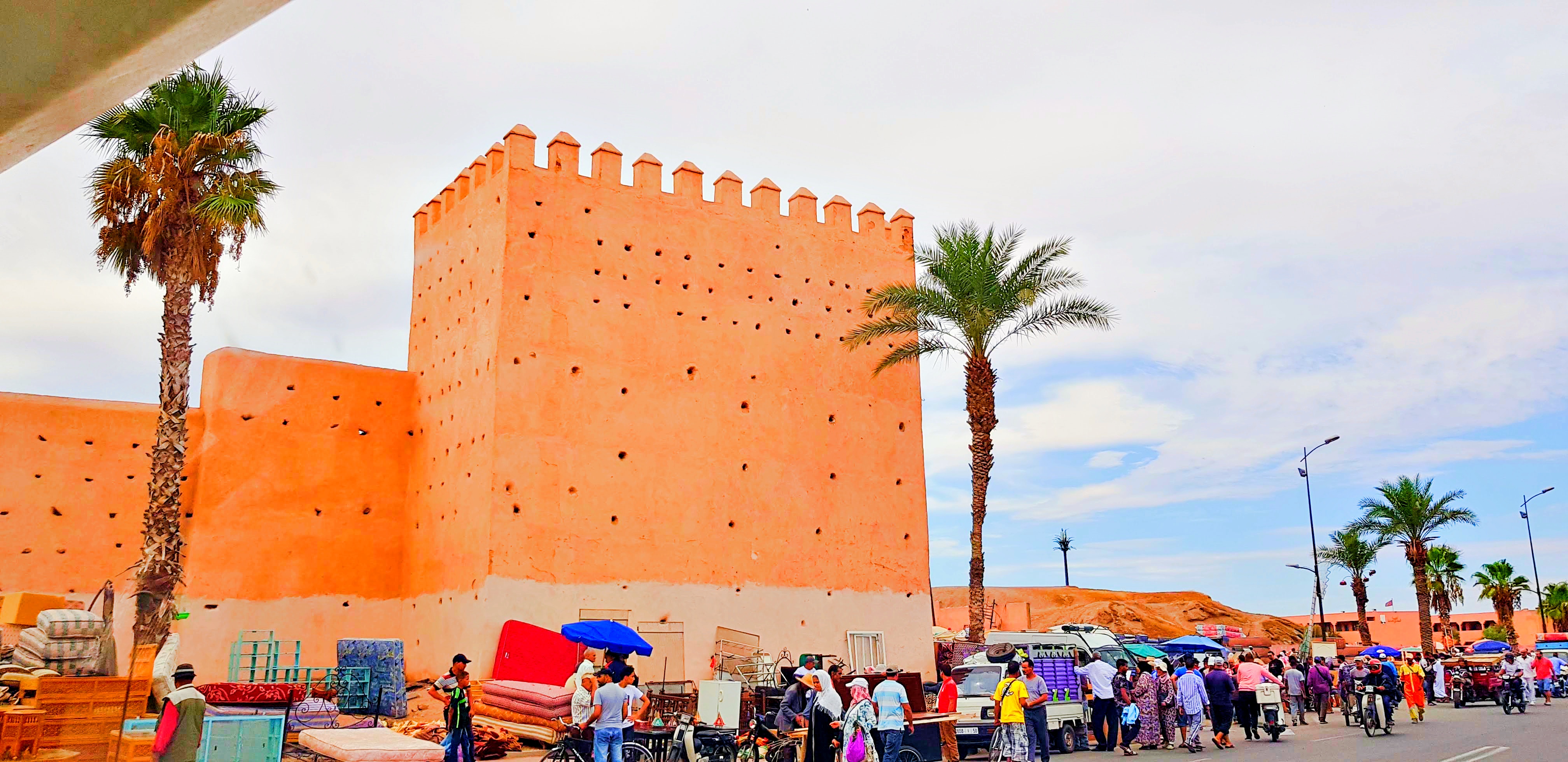
The History of the Marrakech Wall and its Tadelakt Coating
The city of Marrakech, known as the "Pearl of the South" or the "Red City," has been an epicenter of culture, commerce, and political life in Morocco for centuries. One of the city's most iconic features is its impressive walls, which surround the old medina and have witnessed the city's evolution over more than a thousand years. These walls, initially built as a defense against invaders, have recently been re-covered with Tadelakt , an ancient Moroccan coating technique that holds profound symbolic and historical value for the region.
The Beginnings of the Wall of Marrakech
The construction of the Marrakech walls dates back to the 12th century, during the reign of the Almoravids, the first Muslim dynasty to rule the city. Yusuf ibn Tashfin, founder of the city in 1070, and his son Ali ibn Yusuf, ordered the construction of these fortifications in 1126 in response to the need to protect Marrakech's growing population and safeguard its resources.
The original wall was built using typical construction techniques of the time, such as the use of adobe , a material composed of mud and straw, which was compacted and dried in the sun. This technique allowed for the construction of solid and durable structures that withstood the elements and invasions for many centuries.
The Strategic and Cultural Importance of the Wall
Throughout history, Marrakech has been a crucial city in terms of both trade and politics. The walls not only served as a defense against outside invaders but also delineated the boundaries of the city's power and influence. In their heyday, these fortifications helped protect the heart of political life: the mosques, palaces, and souks, where exotic and local goods were traded.
Stretching over 19 kilometers, these walls are dotted with majestic gates, or "bab," each serving as a strategic entry and exit point for the city. The most famous of these is Bab Agnaou , which, although decorative today, was originally one of the main entrances to the royal city.
The Relationship between Tadelakt and Marrakech
Tadelakt is a lime-based wall covering technique typical of Marrakech and other areas of North Africa. This ancient technique, with over a thousand years of history, has traditionally been used in Turkish baths or hammams, palaces, and riads. Its main characteristic is the ability to create a smooth, impermeable, and glossy surface, which can take on a variety of shades, from gleaming white to the famous ochre or red characteristic of Marrakech buildings.
In a historical context, Tadelakt symbolizes much more than a construction technique; it is an element of Moroccan cultural identity. This technique, in addition to its durability, provides a sophisticated and unique aesthetic that has endured over time and has been rediscovered in modern times as a symbol of luxury and tradition.
The Process of Restoring and Coating the Walls with Tadelakt
The passage of time and natural elements have left their mark on the walls of Marrakech. Rain, wind, and earthquakes eroded the original structures, necessitating numerous restoration projects over the centuries. However, in recent decades, the use of Tadelakt to re-cover the walls has become a key project for preserving the city's architectural heritage.
In the 1980s and 1990s, architects and heritage conservationists began to revalue Tadelakt , not only as a decorative coating technique, but as an effective means of protecting and restoring Marrakech's ancient buildings, including its walls. The Tadelakt coating process was a large-scale project that took decades to complete. It began in the early 2000s, and the goal was to restore significant sections of the walls, especially those most damaged by the elements.
The process of covering the walls with Tadelakt has been not only a technical endeavor, but also a cultural one. It required the intervention of highly skilled artisans, known as maalem , who passed down the knowledge of the technique from generation to generation. Each layer of Tadelakt is applied manually, and the surface is smoothed with a specific stone, known as a "galet," to achieve its famous polished appearance. Furthermore, Tadelakt offers natural protection against moisture, which is crucial for preserving the ancient adobe walls.
The Resurgence of Tadelakt and Its Significance in Modern Marrakech
The covering of the walls with Tadelakt symbolizes Marrakech's desire to connect its past with its future. This technique not only honors the city's rich cultural and architectural heritage but also adapts to contemporary conservation needs. In an era where tourism is a vital source of income for the city, preserving its architectural heritage is crucial.
Furthermore, the use of Tadelakt has transcended the walls of the medina and found its way into luxury hotels, spas, and high-end residences around the world, where the goal is to capture the authenticity and beauty of Moroccan craftsmanship.
Conclusion
The restoration of Marrakech's walls with Tadelakt is a true feat of cultural and historical preservation. This monumental project has not only returned the walls to their former glory but has also reaffirmed the city's connection to its roots, through a technique that has stood the test of time and remains an iconic symbol of Moroccan identity. The history of Marrakech, its walls, and Tadelakt are inextricably intertwined, reminding us of the importance of preserving the past while moving into the future.
Don't forget to subscribe to our YouTube channel.